The Socialist Playbook Comes to New York: Will Government-Run Grocery Stores Solve Inflation—or Repeat History?
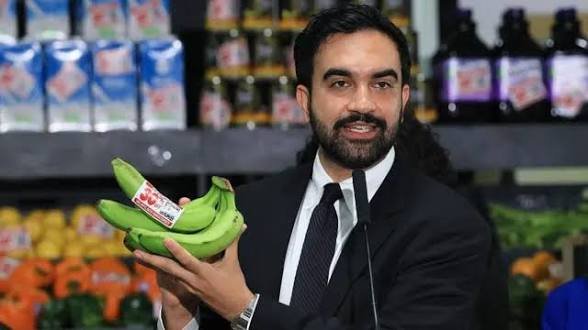
NEW YORK — New York City is preparing to launch one of the most ambitious government-run grocery initiatives in the United States. Under a proposal announced by Mayor Zohran Mamdani, the city plans to open five taxpayer-funded grocery stores that promise to sell food for up to 30% below private market prices.
Supporters argue the program will help families struggling with the rising cost of living. Critics, however, warn that the proposal raises deeper economic questions about competition, public spending, and the expanding role of government in the marketplace.
Government-owned grocery stores operate under a fundamentally different model than private businesses. While supermarkets must cover operating costs and generate sustainable profits, publicly funded stores can absorb financial losses through taxpayer support. Opponents argue that this creates an uneven competitive environment that may discourage private investment over time.
For many Venezuelans, the proposal evokes memories of policies implemented under Hugo Chávez and Nicolás Maduro, where the government expanded its role in food distribution through programs such as PDVAL. What began as an effort to provide affordable food eventually became associated with corruption scandals, supply shortages, long lines, and increased dependence on state subsidies.
Although New York’s proposal differs in both scale and political context, critics contend that the underlying economic principle deserves scrutiny: subsidized prices do not eliminate costs—they redistribute them. The central question, they argue, is not whether consumers pay less at the checkout counter today, but who ultimately bears the financial burden tomorrow.
City officials describe the initiative as a matter of social justice and affordability. Others see it as a broader ideological shift toward greater government participation in sectors traditionally served by private enterprise.
At The Freedom Post, we believe the debate extends beyond grocery stores. It is ultimately a discussion about the proper role of government, the importance of free-market competition, and the long-term consequences of replacing market incentives with taxpayer-funded alternatives.
As New York moves forward with this experiment, one question remains:
Can government-run grocery stores sustainably lower food prices—or will taxpayers eventually pay the difference?
Ahora el texto para X (dejando espacio para agregar el enlace al carrete):
New York is betting on taxpayer-funded grocery stores that promise prices up to 30% lower.
Supporters call it affordability. Critics warn it repeats a model that shifts costs from shoppers to taxpayers and weakens private competition.
History offers lessons.